Managing cash in a shock year: protecting your company when payments are late and the dinar moves
Oil stopped, salaries were late, and the dinar moved from 1,300 to 1,500 per dollar. How the shock reaches your company, and seven practical steps to protect its cash that you can start this week.
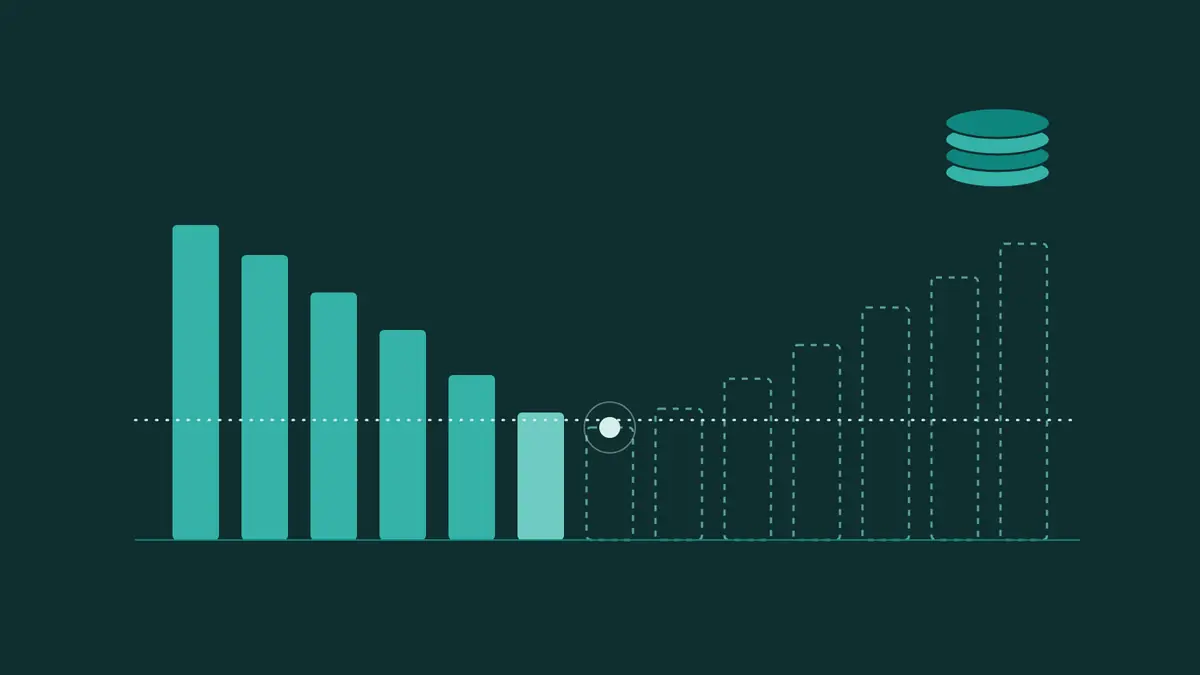
In Baghdad's Jameela market, a food trader told Al Jazeera he lost about 25 million dinars after the Central Bank devalued the dinar on 7 October 2026. He said many traders had stopped buying and selling until the rate settled, simply because they did not know what price to put on the goods in their stores (Al Jazeera).
That scene sums up 2026 for many Iraqi companies: the problem was not too little profit, but running out of cash. Running out of cash kills companies that are profitable on paper. This article is about how to protect your company's cash in a year like this, with practical steps you can start this week.
What happened in 2026? Three shocks in a row
Shock one: oil
After the Strait of Hormuz closed with the regional war in late February, Iraq's oil exports fell from about 100 million barrels in February to about 32 million a month in May and June. Oil revenue, at least 90% of the budget, fell from $6.8 billion in February to about $2.3 billion a month (The National).
Shock two: the state's cash
The state spends about $6.5 billion a month on salaries, pensions and social welfare, according to the Finance Ministry. In August, July salaries had not been paid on time to many employees. A Finance Ministry official was quoted as saying the state would pay "whenever we have cash," and paying salaries every 45 days was under discussion. Payments to contractors, farmers and other creditors were also delayed.
Shock three: the currency
On 7 October the Central Bank moved the official rate from 1,300 to 1,500 dinars per dollar, a devaluation of about 13% (Iraq Business News). The Prime Minister said the alternatives on the table were cutting salaries by 35%, paying them every 45 days, or borrowing abroad (Al Jazeera).
How does the shock reach your company?
Even if you do not work with the government and do not import, the shock reaches you in four ways:
- Demand. Government salaries drive a large part of the market. When salaries are late, people postpone purchases, and your sales fall even if nothing changed in your company.
- Collections. Your customers face the same pressure, so they pay you later. Government bodies pay later still.
- Import costs. You buy in dollars and sell in dinars, because the rules prohibit selling in dollars. So every new shipment costs more in local currency.
- No bank safety net. Only 2.3% of Iraqi firms have a bank loan or credit line (Enterprise Surveys 2022). Most companies have nobody to turn to when cash runs out. The till is the only line of defence.
Rule one: cash before profit
In normal times you look at profit. In a crisis you look at cash. Profit is an opinion; cash is a fact. Your company can be profitable on paper and still be unable to pay its staff next month, because its profits are locked in customer debts or in stock that does not move.
Seven practical steps
1. A thirteen-week cash forecast
This is the most important tool in any crisis, and it needs no complex software. A simple table is enough:
- Columns: the next thirteen weeks.
- Rows: every amount you expect to come in, and every amount you must pay out, week by week.
- Bottom line: the expected balance at the end of each week.
Update it every week and compare forecast with actual. You see the week your balance goes below zero two months before it arrives, not on the day.
2. Know your dollar exposure
List everything you pay in dollars, everything you receive in dollars, and everything in your stock that you bought in dollars. Then calculate: what happens to your margin if the rate moves again? A company that knows this number decides calmly. One that does not stops selling, like the traders in Jameela market.
3. The money customers owe you
- Rank customers by amount and by how late they are, and start with the largest and oldest.
- Ask for a deposit on new orders, even a partial one.
- Offer a small discount for immediate or electronic payment, if it costs less than waiting.
- Put every payment agreement in writing, even as a clear WhatsApp message.
4. Suppliers
Your suppliers are in the same position, and they usually prefer a clear agreement to a later surprise. Talk to them early: longer payment terms, split payments, or smaller and more frequent orders. Being transparent with a supplier now protects the relationship after the crisis.
5. If you work with the government
When government payments are late, Iraqi lawyers advise contracting companies to protect their legal position (AJC):
- Documentation: send formal written notices recording the due date, the delay and its effect on the schedule.
- Extension of time: request more time to complete the work if non-payment caused the delay, so you are not hit with delay penalties.
- Compensation: claim any cost increase caused by delayed funding.
- Suspension: suspend work only after a carefully worded written notice, so it is not treated as abandonment.
These are general points; applying them to your contract needs a lawyer.
6. Pricing and stock
- Price on replacement cost, not purchase cost: the question is not "what did I pay for these goods?" but "what will I pay for the same goods tomorrow?"
- Shorten how long your price quotes are valid: a quote valid for thirty days in a volatile market can turn into a loss.
- Move slow stock: goods that do not move are locked-up cash. Selling at a lower margin today may beat waiting.
7. A cash floor and three scenarios
Set an amount that is never touched, covering, for example, two months of salaries and your key fixed commitments. Then set three scenarios: best, expected and worst. For each, write down in advance what you postpone, what you stop, and when. A decision you make calmly today is far better than one you will make under pressure.
What not to do
- Do not stop working altogether. Stopping completely protects cash for a few days but hands your customers to whoever kept going.
- Do not lose your best people. Cutting costs is necessary, but the people who know your company and its customers are the ones who will bring it back to growth. Start with other costs.
- Do not speculate on the currency. Buying dollars or hoarding stock in the hope of profiting from a rate change is not your business, and it can cost you more than you can bear.
- Do not rely on verbal promises. In a crisis, what is not written down is forgotten or denied.
What to watch
- Oil exports: they returned to about 75% of pre-war levels in September, according to an analysis by AFC Iraq Fund. Each improvement reaches salaries, and then the market, about two months later.
- The IMF programme: Iraq has formally requested one, and its conditions will shape fiscal policy.
- The 2027 budget: the draft assumes an oil price of $58 a barrel, with a deficit of about IQD 43 trillion (The National).
- Salary dates: the clearest early signal of demand in the market.
In short
Crises do not pick only weak companies. They pick companies that cannot see their cash. The good news is that seeing your cash needs neither expensive systems nor a permanent expert: a thirteen-week table, a clear number for your dollar exposure, an honest conversation with your customers and suppliers, and a written plan for three possibilities.
A company that comes out of 2026 with its cash under control will not only survive; it will find the market in 2027 less crowded.
Sources
- Al Jazeera: Traders after the devaluation (Oct 2026)
- Iraq Business News: The dinar's devaluation and near-term outlook (Oct 2026)
- The National: The July salary crisis (Aug 2026)
- The National: The 2027 budget (Oct 2026)
- Al Jazeera: "There is no money" (Aug 2026)
- AJC: Managing contractual claims in government projects (Aug 2026)
- World Bank: Enterprise Surveys, Iraq 2022
Figures are reported as their sources published them, and some come from government sources not independently verified. This article is general information, not financial or legal advice for your situation. Decisions on contracts and financing need review by specialists.
This article is general information, not legal, financial or tax advice for your situation.
Read next
 Numbers and performance
The 2027 budget: what it means for your company
Iraq's largest draft budget yet plans 217 trillion dinars of spending on 4 million barrels a day of exports. We read where the money comes from, where it goes, how much will actually be paid, and what it means for your company.9 min read Customers and sales
Celebrity chips in Iraq: a smart business model or a bubble?
Social media stars sell chips under their names with cars and cash as prizes. Why the model spread so fast, what experience abroad says, and five lessons for any business owner.8 min read Operations and systems