Foreign investment in Iraq: the real concerns and the real benefits
In 2026 Iraq's oil exports collapsed and recovered, and the IMF expects a 16% contraction followed by 19% growth. Six risks and six benefits in numbers, and seven questions before entering the market.
Few years have held as many contradictions for Iraq as 2026. In February the country exported 3.36 million barrels of oil a day. In April, after the Strait of Hormuz closed, exports fell to 131,000 barrels. By October they were back to about 3.4 million (The National). The IMF expects Iraq's economy to shrink 16% this year, then grow 19% next year (Shafaq News).
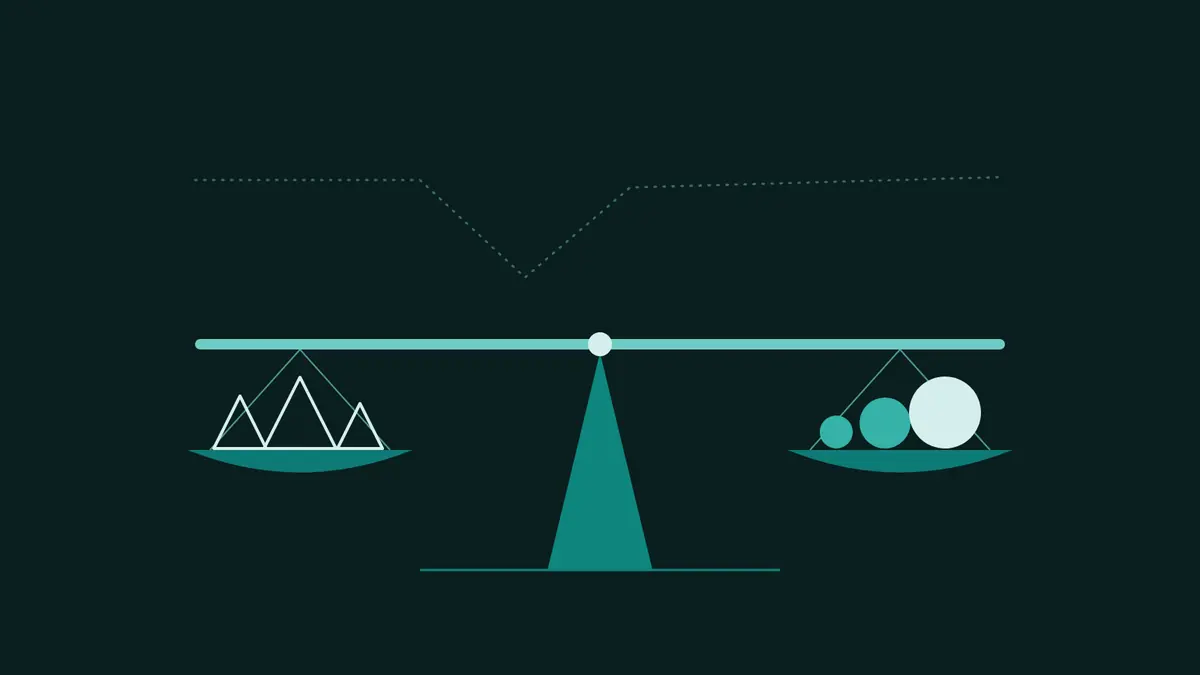
That is the equation every foreign company considering Iraq faces: real and large risks, and real and large opportunities, in the same country at the same time. This article neither sells Iraq nor warns against it. It puts both sides on the table, with numbers, and then suggests a way to think through the decision.
What does foreign money itself say?
Before the concerns and the benefits, it helps to look at what investors actually did, not what they said:
- Net foreign investment is negative. In 2024, $7.6 billion of foreign holdings left Iraq, for a net loss of about $8 billion, according to the Iraq Future Foundation using Central Bank data (Shafaq News).
- Promises are bigger than money. The authorities announced $63 billion in investment commitments over two years. The same foundation found no clear trace of them in monetary statistics and concluded that many projects are pending or inactive.
- Yet some are betting heavily. TotalEnergies leads the Gas Growth Integrated Project in Basra with a 45% stake, alongside Basra Oil Company (30%) and QatarEnergy (25%). The project gathers flared gas to feed 1.5 GW of power plants, builds a 1 GW solar farm and a seawater supply project, and is expected to employ about 7,000 Iraqi workers at peak construction (TotalEnergies).
So the picture is neither "investors are fleeing" nor "investors are arriving." Small, hesitant money is leaving; large money backed by government and international partnerships is entering, carefully. Understanding that difference is where any decision starts.
The concerns: six real risks
1. An economy hanging on oil
Oil provides over 90% of federal budget revenue (2026 Investment Climate Statement). Before the war, about 95% of Iraq's crude exports passed through the Strait of Hormuz (ORF Middle East). When the strait closed, public finances paid at once. Foreign reserves fell from about $109 billion to $80.6 billion, the government borrowed domestically to cover salaries, devalued the dinar in October, and formally requested an IMF financing programme (The National).
What this means for you: your revenue in Iraq is tied to the oil price even if you are not in oil, because government spending and salaries drive most demand in the market.
2. Who pays, and when?
When oil revenue falls, the first to feel it are contractors and suppliers working for the government. In the first half of 2026 oil revenue was about $18.7 billion. Advances stopped and payments to contractors and suppliers on government contracts were delayed, according to an analysis by an Iraqi law firm (AJC). The U.S. State Department notes that some firms in the Kurdistan Region have unpaid arrears for work dating back to 2014.
3. Narrow financial pipes
- Transfers: the Central Bank ended its dollar auction on 2 January 2025, and international transfers now run through correspondent banking relationships. Foreign firms report difficulty repatriating funds.
- The grey list: on 19 June 2026 the Financial Action Task Force (FATF) returned Iraq to its list of jurisdictions under increased monitoring (AGBI). That means longer checks on every transfer in or out of the country.
- The banking sector: state-owned banks hold about 85% of banking-sector assets (2026 Investment Climate Statement).
4. The legal framework
- Ownership cap: under the federal Companies Law, a foreign investor generally may hold up to 49% of an Iraqi company, with sector exceptions. The Kurdistan Region allows full foreign ownership of qualifying companies.
- Double registration: a company that wants to operate in both the Region and federal Iraq must register in both. Licensing in the Region can take three to six months.
- Dispute resolution: Iraq has been party to the New York Convention on arbitral awards since 2022, and to the ICSID Convention. But domestic arbitral awards generally need court confirmation, and a draft Arbitration Law has been before parliament since 2024.
- IP and bankruptcy: the framework exists, but enforcement is uneven. Bankruptcy is still governed by Commercial Law No. 49 of 1970.
5. Corruption and the "right" partner
In the World Bank's 2022 survey, 50.5% of Iraqi firms reported at least one bribe request, versus 17.7% in the region (Enterprise Surveys). The State Department notes that investors may face pressure to take on well-connected local partners. Choosing a local partner in Iraq is not only a commercial decision; it is a risk decision.
6. Security and political stability
The U.S. State Department rates Iraq at Level 4 in its travel advisories. In 2026 the regional war added a new layer of uncertainty, and important ministries are still run by acting officials (Shafaq News). Security in Iraq varies a great deal from one city to another, and a serious decision needs an up-to-date local assessment, not headlines.
The benefits: why companies stay, and why they come
1. A large, young, connected market
Iraq has about 47.3 million people, more than 83% of them online, and 50.8 million mobile connections (DataReportal). Nearly 60% of the population is under 25. This market grows on its own every year.
2. Large gaps mean certain demand
When electricity demand exceeds 60,000 MW and the gap is about 40,000 MW (Shafaq News), the question is not "is there demand?" but "who can meet it?" The same applies to water, transport, housing and digital services. In Iraq most of the big problems are still unsolved, and that is exactly what makes them opportunities.
3. Real legal incentives
The National Investment Law gives licensed projects a 10-year tax exemption from the start of commercial operations. The general corporate income tax rate is 15%. Foreign investors may lease government land for up to 50 years, renewable, without an Iraqi partner (2026 Investment Climate Statement). Each of these details needs review by a legal and tax adviser before you rely on it.
4. Mega-projects open supply chains
The Basra gas project, the Grand Faw Port, and the Development Road, estimated at about $17 billion (Shafaq News). Each needs hundreds of suppliers, subcontractors and service providers. The opportunity is not limited to whoever wins the main contract.
5. A state slowly reducing friction
Customs automation through ASYCUDA, electronic signatures, digital payments and electronic tax assessment. These steps do not solve everything, but they reduce the manual touchpoints where delay and corruption multiply. A company that enters today benefits from an environment that gets a little better every year.
6. Little competition
In many sectors there is no serious international competitor yet. A company that builds its name and network now, while others hesitate, finds itself in a position that is hard to take away later.
What do the companies that succeed have in common?
Looking at the major projects and the market's requirements, clear patterns emerge:
- Partnerships that share risk. The large projects that move forward are often built on a partnership between an international company, an Iraqi state partner, and sometimes a third regional partner, as in the Basra model.
- Phased entry. Start with an office, a partner or a pilot project, and test payment, transfers and operations before committing large capital.
- Separating currency risk. Watch the gap between dinar revenue and dollar costs, and build pricing and contracts around it.
- Local hiring as an advantage. The law requires about 80% of workers on private projects to be Iraqi (75% in the Kurdistan Region). Smart companies turn this requirement into an investment in a local team that knows the market.
- Documentation above all. Written official correspondence, clear arbitration clauses in contracts, and a record of every payment and claim.
How to decide: seven questions before you enter
If you are considering entering the Iraqi market, these are the questions we plan any entry decision around:
- Who pays you? The government, a private company, or consumers directly? Each carries very different risks.
- In which currency, and how does the money leave? Test the transfer route before you build on it.
- Where do you register? Baghdad, Erbil, or both? And why?
- Who is your local partner, and what do they really add? Market knowledge, or only connections?
- What if payments stop for six months? Can your company survive it?
- What are the dispute-resolution clauses in your contract? And are they enforceable in practice?
- What is the small first phase that tests all of the above before you commit much?
What to watch until 2027
- Alternative export routes: any progress on pipelines that bypass Hormuz reduces the biggest risk in Iraq's economy.
- The IMF programme: its conditions will set the direction of fiscal and banking reform.
- The 2027 budget: the draft assumes an oil price of $58 a barrel, revenue of about IQD 174 trillion and spending of about IQD 217 trillion.
- Leaving the grey list and the arbitration law: two steps that may change an investor's calculation more than any tax incentive.
Iraq is not a market for anyone looking for fast, safe profit. But it is not a closed market either. It is a market for those who enter with their eyes open: who know the risks in numbers, build a plan that withstands them, and are patient enough to reap what others are not patient enough to wait for.
Sources
- The National: Iraq's 2027 budget (Oct 2026)
- Shafaq News: IMF forecasts for Iraq (Oct 2026)
- Shafaq News: Foreign investment deficit (Jul 2025)
- TotalEnergies: Gas Growth Integrated Project (Sep 2025)
- U.S. State Department: 2026 Investment Climate Statement, Iraq
- ORF Middle East: Hormuz and Iraq's economy (Jun 2026)
- AJC: Oil revenue decline and contractual claims (Aug 2026)
- AGBI: Iraq on the grey list (Jun 2026)
- World Bank: Enterprise Surveys, Iraq 2022
- Shafaq News: Institutional readiness and acting ministers (Oct 2026)
- DataReportal: Digital 2026 Iraq
- Shafaq News: The electricity gap (Jun 2026)
- Shafaq News: The Development Road
Figures are reported as their sources published them, and the situation in 2026 is changing fast. This article is general information, not legal, investment or tax advice. Any investment decision needs review by legal and financial specialists.
This article is general information, not legal, financial or tax advice for your situation.
Read next
 The Iraqi market
Why is there no Iraqi unicorn yet?
In 2025 Iraqi startups raised $17.6 million of the region's $7.5 billion. We trace the broken links between an idea and a billion: funding, exits, law, market and stability, and what would make the first Iraqi unicorn possible.9 min read The Iraqi market
Automation in Iraq, 2026: the state is building digital roads, organisations still run on paper
Unified ID, payments, customs and e-signature have gone digital, but most of the work behind them is still on paper. A look at the numbers and constraints, and six steps, in order, for your organisation.11 min read Numbers and performance